
Frequently 10 Asked Questions About Acrylic Sheet and Plexiglass Sheet
Author:Kevin Zhang – P-Manager
Acrylic sheet—commonly known as Plexiglass Sheet & Perspex Sheet—has transformed modern construction and design. These industrial-grade thermoplastic panels offer a lightweight, shatterproof alternative to glass while delivering superior clarity, weather resistance, and versatility. Whether you’re planning skylights, protective barriers, or custom signage, understanding the properties of acrylic sheet ensures smarter material choices.
Below, we answer the 10 most frequently asked questions about acrylic sheet and Plexiglass sheet,combining expert insights from manufacturers(JUXIN PLASTIC GROUP) and industry professionals.
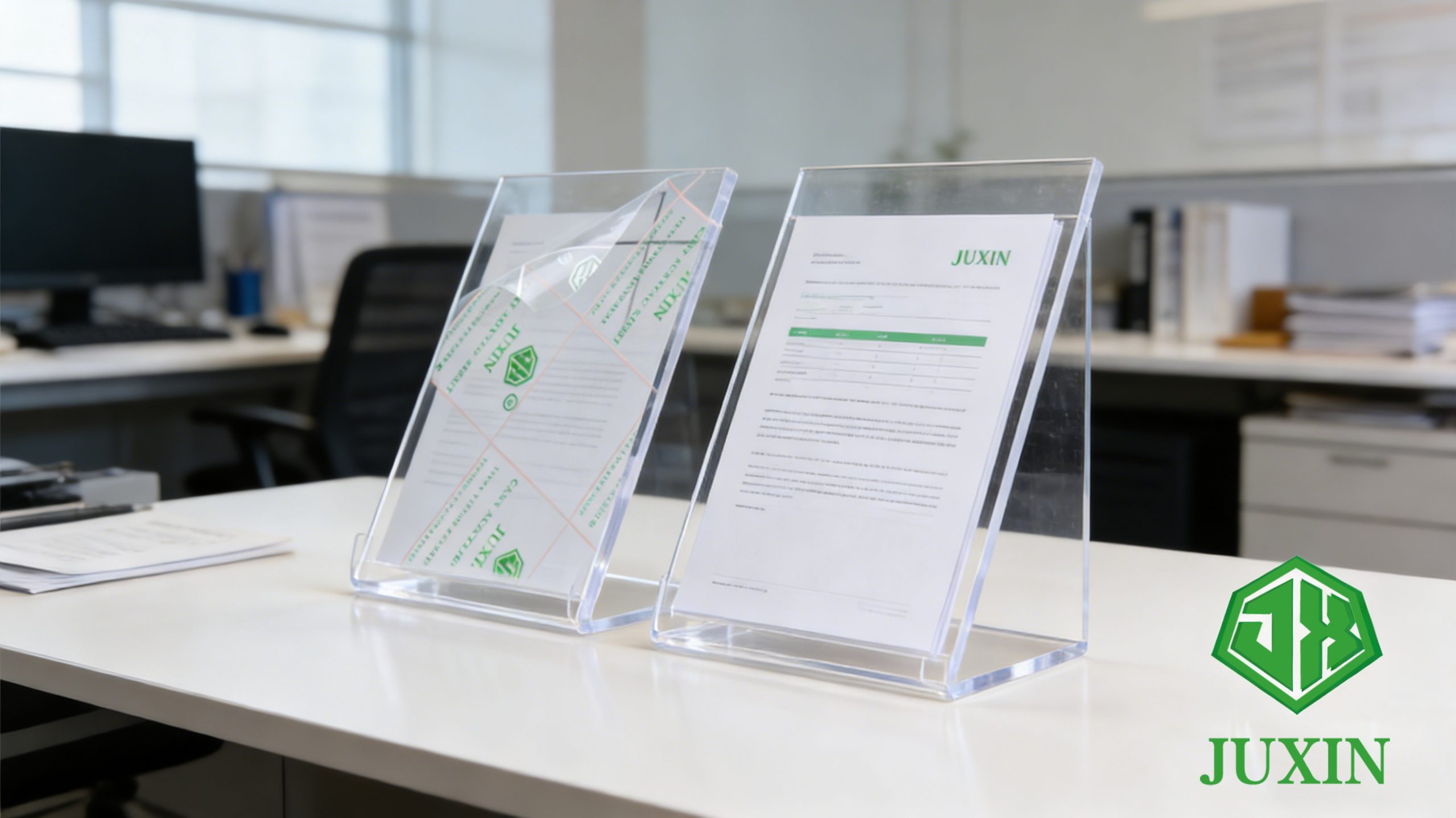
Acrylic sheet applications span nearly every sector.
In construction, acrylic sheet replaces regular glass in windows, skylights, and greenhouse panels due to its impact resistance and half-the-weight advantage. Beyond building, Plexiglass sheet appears in aquariums, retail displays, hockey rink boards, motorcycle windshields, and even military aircraft canopies.
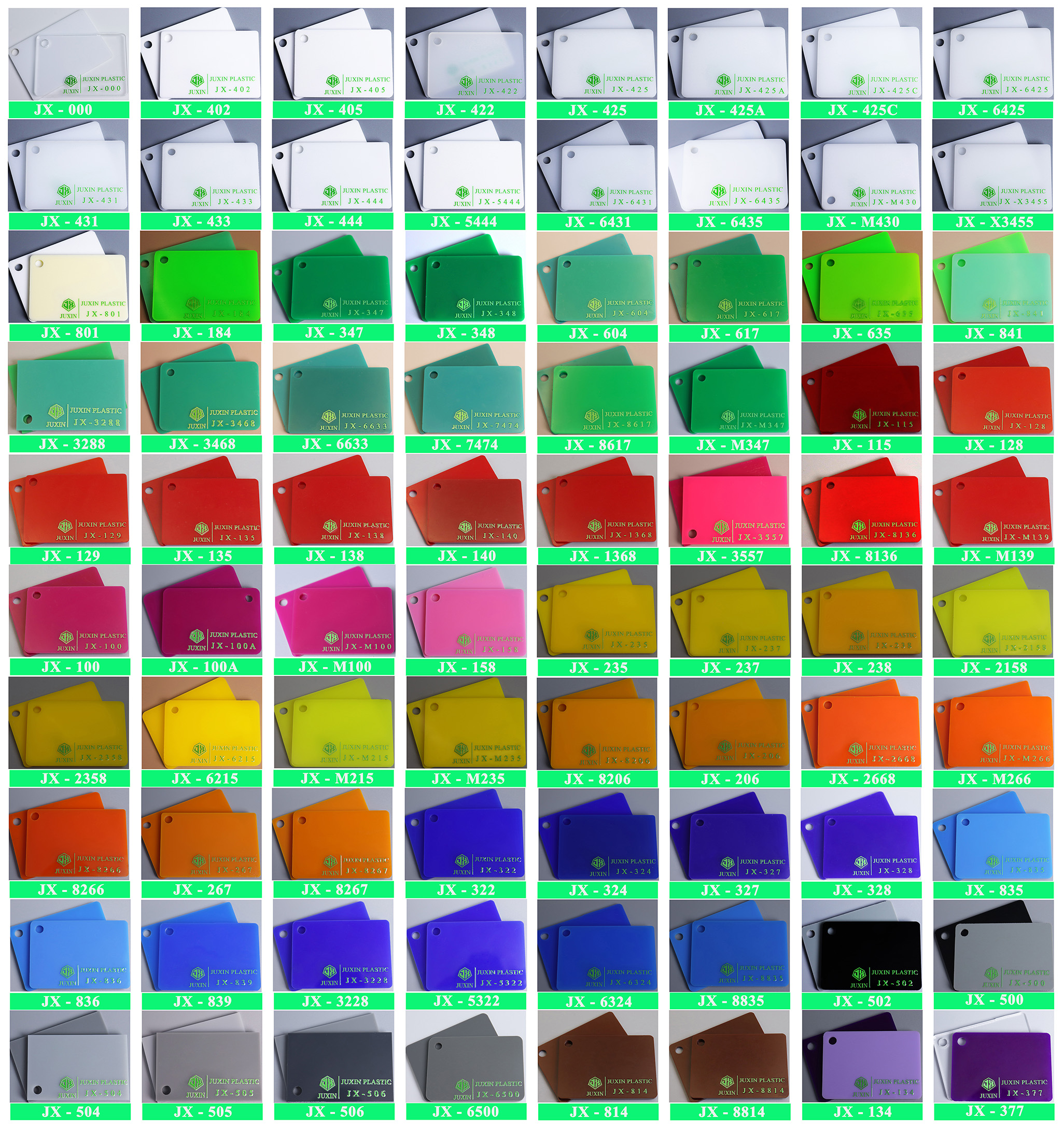
Interior designers specify acrylic sheet for backlit signs, furniture, advertising, and sculptures because it polishes to a crystal-clear finish and accepts vibrant colors【JUXIN Transparent plexiglass transparency up to 93%!】. From safety shields to bathtubs, this versatile plastic adapts to both functional and aesthetic demands.

Yes, acrylic sheet carries a higher upfront cost than standard glass. However, the total cost of ownership tells a different story. Acrylic sheet is significantly lighter—about 50% less weight—which reduces shipping expenses and allows faster, safer installation without heavy equipment. Its shatterproof nature eliminates breakage during transit and on-site handling. Over time, acrylic sheet resists hazing, corrosion, and weather damage far better than glass, meaning fewer replacements. When you factor in durability, safety, and longevity, acrylic sheet delivers superior long-term value.
Extremely durable. The Plexiglass sheet is engineered to withstand impacts that would shatter glass instantly. It absorbs force through slight flexing rather than cracking, making it ideal for high-traffic areas and storm-prone locations. Temperature swings from subzero cold to intense heat do not cause brittleness or warping. Even if extreme force damages Plexiglass sheet, it breaks into dull-edged fragments rather than sharp shards, significantly reducing injury risk. With proper maintenance, acrylic sheet maintains structural integrity for decades.
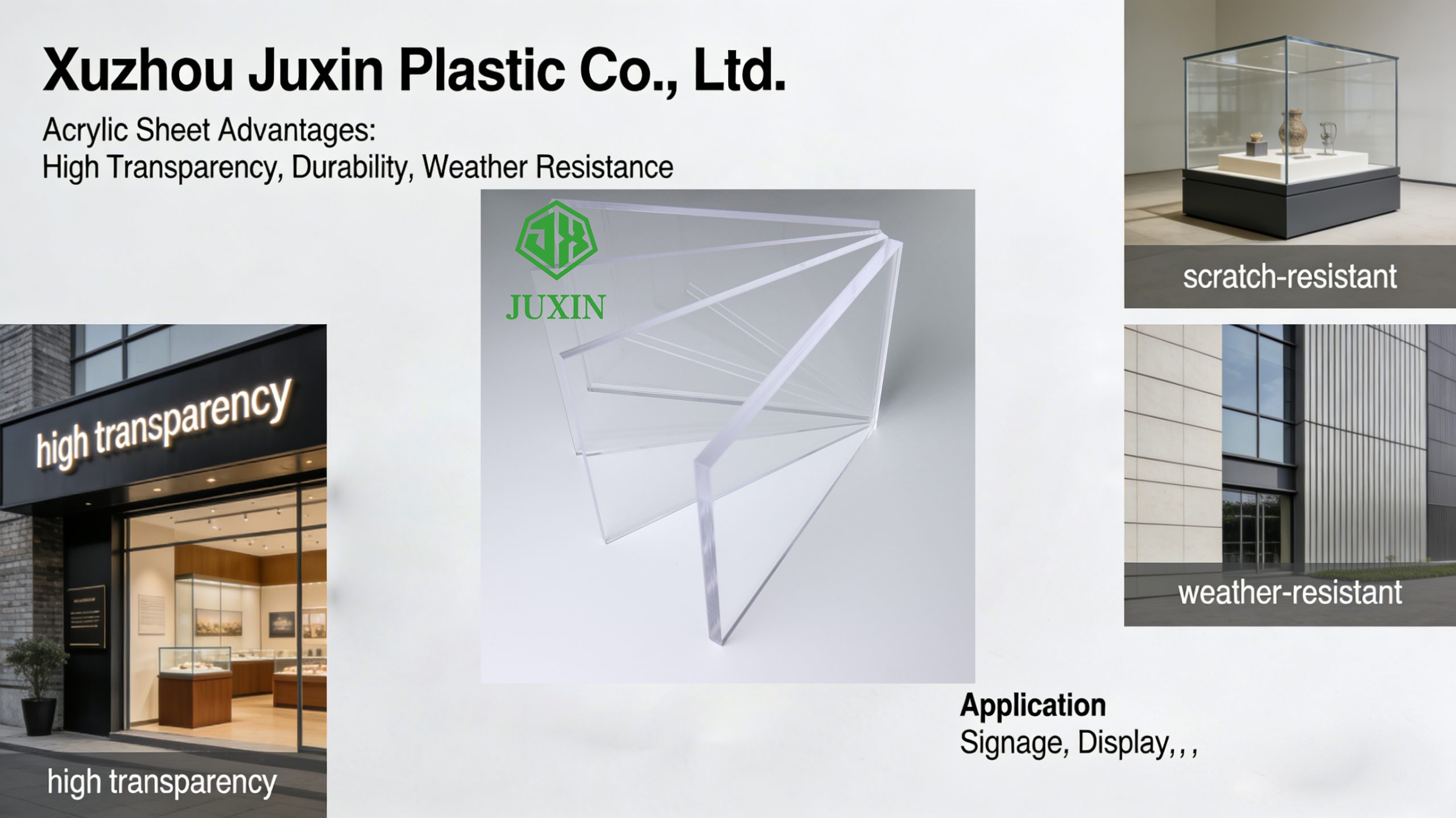
All acrylic sheet is plastic,made of PMMA material, but not all plastic is acrylic sheet. Acrylic sheet refers specifically to polymethyl methacrylate (PMMA), an engineering-grade thermoplastic. Unlike commodity plastics such as polyethylene or PVC, acrylic sheet offers optical clarity comparable to glass, exceptional UV stability, and resistance to weathering and chemical attack. Standard plastics may yellow, soften, or become brittle under sun exposure or stress; acrylic sheet retains its properties in demanding environments. This distinction makes acrylic sheet the preferred choice when transparency and longevity matter.
For most applications, yes. Acrylic sheet outperforms glass in four key areas: weight, safety, workability, and weather resistance. A Plexiglass sheet weighs half as much as an equivalent glass pane, easing handling and reducing structural support requirements. It resists shattering upon impact—critical for schools, hospitals, and public spaces. Fabricators can cut, drill, and thermoform acrylic sheet on-site using standard woodworking tools, while glass requires specialized equipment. Additionally, acrylic sheet blocks UV radiation without yellowing, whereas glass offers minimal UV protection. The only areas where glass retains advantages are extreme scratch resistance and higher temperature tolerance beyond 160°C.
Yes, Acrylic Sheet ranks among the strongest transparent plastics available. While polycarbonate has higher impact strength, acrylic sheet excels in stiffness, surface hardness, and weatherability. It resists deformation under load better than many thermoplastics and maintains its shape in outdoor installations for years. Plexiglass sheet also demonstrates superior resistance to cleaning chemicals and industrial solvents compared to softer plastics. For applications requiring both strength and long-term clarity—such as museum display cases or exterior signage—acrylic sheet is the benchmark material.
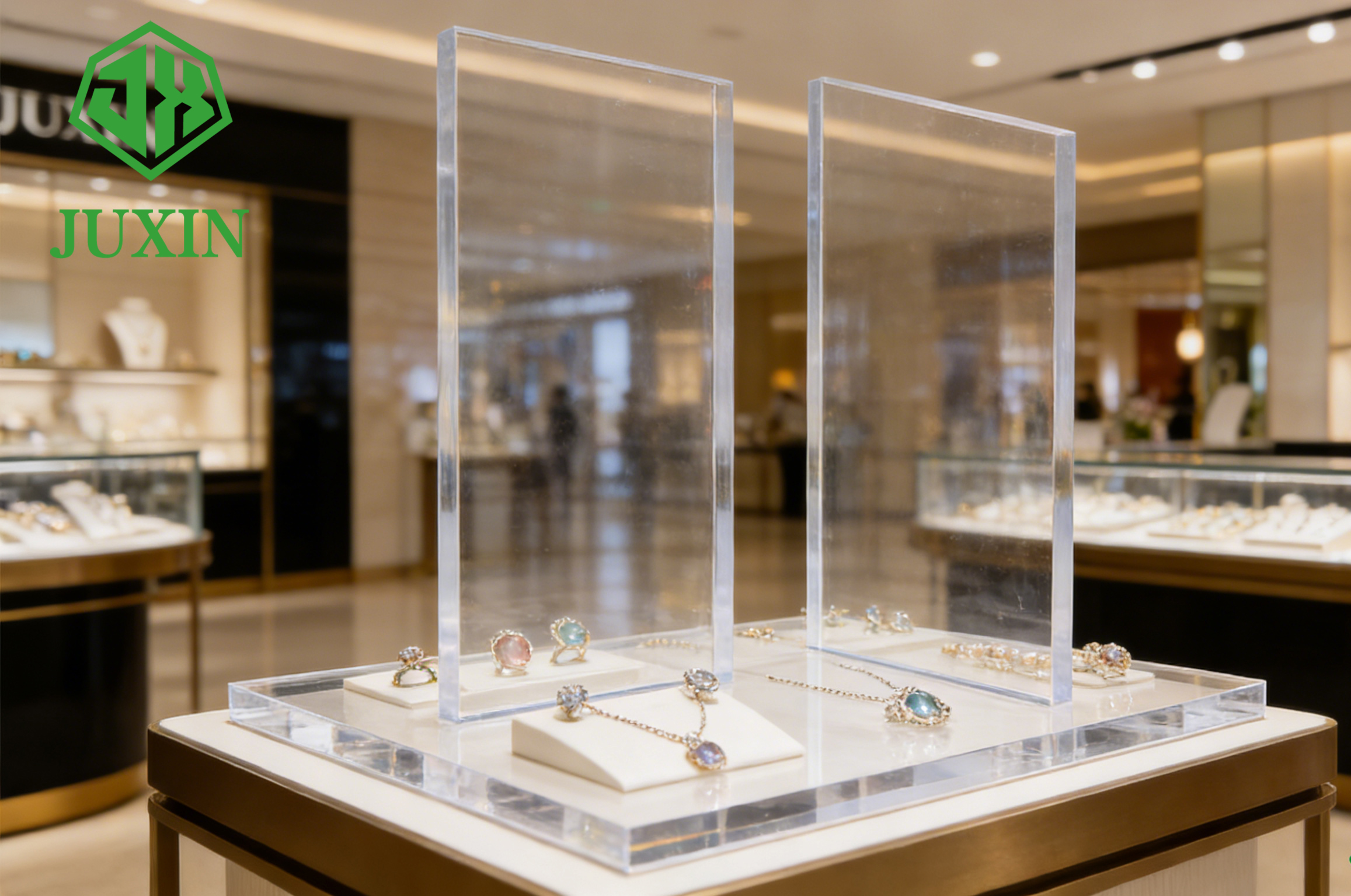
No, fully cured Acrylic sheet is non-toxic and safe for everyday use. The finished product emits no harmful fumes and meets OSHA non-hazardous material standards. Food-contact grades of acrylic sheet are available for display cases and kitchen applications. During manufacturing, molten acrylic releases methyl methacrylate vapor, which requires ventilation and safety protocols.
However, once cast or extruded into solid sheet form, acrylic becomes chemically inert. It doesn’t leach additives like some plastics, making the JUXIN Plexiglass sheet suitable for aquariums and medical device components.
No. The Acrylic sheet is inherently UV-stable. Unlike polycarbonate or polystyrene, which require UV coatings to prevent yellowing, acrylic sheet resists photodegradation at the molecular level. Decades of exposure to direct sunlight will not cause the acrylic sheet to turn yellow, become brittle, or lose light transmission. This is why greenhouses, solariums, and outdoor light fixtures rely on Plexiglass sheet—it preserves clarity and color intensity indefinitely. Manufacturers often provide 10-year warranties against yellowing for transparent acrylic sheet.
Yes, clear acrylic sheet withstands punishing weather extremes. It endures continuous rain, snow, hail, and salt spray without surface erosion or clouding. High-grade acrylic sheet incorporates UV absorbers that prevent degradation from solar radiation. Unlike glass, it does not expand and contract dramatically with temperature shifts, reducing stress on mounting frames. Properly installed Plexiglass sheet skylights and exterior glazing routinely last 15–20 years with minimal maintenance. Acrylic sheet is also resistant to acidic rain and atmospheric pollutants common in industrial zones.
Three primary manufacturing methods produce distinct acrylic sheet types:
→ Extruded Acrylic Sheets: Made by continuous melt processing. Offers excellent thickness tolerance and lower cost. Best for general fabrication, signage, and thermoforming.
→ Cell Cast Acrylic Sheets: Produced between glass plates in batches. Provides superior optical clarity, molecular weight, and chemical resistance. Preferred for luxury displays, the advertising industry, aerospace windows, and deep forming.
→ Continuous Cast Acrylic Sheets: Combines the benefits of extrusion and cell casting. Delivers consistent quality, large sheet sizes, and good forming characteristics. Commonly specified for architectural glazing and spa applications.
Each acrylic sheet type serves specific needs; your supplier can recommend the optimal grade based on impact requirements, forming complexity, and budget.
JUXIN PLASTIC stands as a leading acrylic sheet manufacturer in China, specializing in custom acrylic and Plexiglass sheet solutions. We supply extruded, cell cast, and continuous cast acrylic sheet in unlimited sizes, colors, and thicknesses to meet global construction and industrial demands. Every acrylic sheet undergoes rigorous quality testing for clarity, impact strength, and UV resistance. Whether you need standard transparent panels or bespoke colored acrylic sheet for brand installations, our engineering team delivers precision-cut, ready-to-install products.
Contact JUXIN PLASTIC today for competitive quotations and technical guidance. Let our acrylic sheet expertise support your next project—from concept to completion.